Melbourne, Australia | August 15, 2026
Five years on, the consequences are an unmitigated disaster for women and girls, Hazaras and other minorities, an entire generation of young Afghans, and for regional and global security.
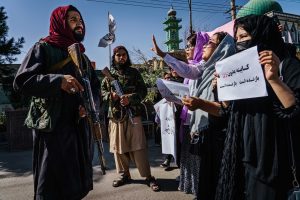
For women and girls, the Taliban has created one of the most extreme systems of institutionalised gender oppression in the world. Women have been pushed out of education, employment and public life, while girls are denied the opportunity to learn, build careers and shape their own futures. This is not simply discrimination. It is the systematic removal of women from society.
For Hazaras, the situation is particularly devastating. We are stranded at the intersection of ethnicity, religion and gender. Hazaras face exclusion, discrimination and insecurity, while Hazara women experience these harms alongside the Taliban’s systematic repression of women.
The consequences are also geopolitical. The US withdrawal and the subsequent disengagement from Afghanistan sent a deeply concerning signal about whether the international community will remain engaged when attention moves elsewhere. Afghanistan cannot simply be abandoned because the war is no longer dominating the headlines.
What happens in one part of the world does not stay there. Al-Qaeda continues to maintain a presence in Afghanistan, alongside other terrorist organisations. The Taliban’s return has not eliminated terrorism. The Taliban is not a counter-terrorism strategy.
At the same time, extremist ideology has found greater space to expand. Young Afghans are growing up under a system that restricts education, suppresses dissent and limits independent and critical thought. When an entire generation is denied inclusive education and exposed to increasingly extremist ideological environments, the consequences can extend far beyond Afghanistan.
This is why Afghanistan is not simply a humanitarian issue. It is a human rights issue, a women’s rights issue, a minority rights issue, a regional security issue and an international security issue.
As an Australian Hazara woman, lawyer and human rights advocate, this is why I continue to speak. I also encourage our young and educated generations to speak, engage and advocate. We need to continue raising these issues with our government, parliamentarians, government officials, civil society, the United Nations and international human rights institutions.
Australia has a responsibility. Australia was deeply involved in Afghanistan for two decades and made commitments to human rights, women’s rights, minority rights and the protection of Afghan people. We cannot simply walk away.
The Afghan diaspora also has a responsibility. Those of us who have found safety, education and freedom in Australia have something incredibly valuable: a voice and access to institutions that people inside Afghanistan often do not have. We should use that voice to amplify Afghan women, Hazaras and other communities whose voices are being suppressed.
This is also why the closure of the Embassy of the Islamic Republic of Afghanistan in Canberra matters. The Australian Government has made clear that it does not recognise the Taliban as the legitimate representatives of the Afghan people and does not intend to accept a Taliban-appointed diplomat or representative.
But the closure has nevertheless created a vacuum. That vacuum must not become an opportunity for Taliban sympathisers or Taliban-aligned actors to establish influence through informal consular services, community structures or attempts at official representation.
For Australian Hazaras, the prospect of Taliban-aligned representation gaining a foothold in Australia is deeply distressing. We fled a regime that persecutes Hazaras, denies women basic rights and suppresses dissent. We should not have to see that ideology gain influence or legitimacy here.
The psychological impact on Australian Hazaras should not be underestimated. For many of us, the Embassy was a physical connection to Afghanistan and to a country that existed before the Taliban takeover. Its closure can feel like another piece of Afghanistan disappearing and another reminder that the Taliban’s impact reaches even those of us living safely in Australia.
Australia must ensure that this vacuum is not filled by Taliban representatives or Taliban-aligned actors. There must be a clear distinction between the Afghan people and the Taliban regime, and Afghan Australians must continue to have access to legitimate, independent representation and essential consular pathways.
We cannot allow diplomatic disengagement to become moral disengagement. We cannot confuse Taliban control with legitimacy, or silence with stability.
What can we do? Listen. Learn. Speak. Contact our elected representatives. Support Afghan-led organisations and girls’ education. Stand with Hazara communities. Challenge misinformation. Keep Afghanistan on the political agenda.
Five years is long enough
Afghan women and girls are not asking the world to save them. They are asking us not to abandon them.
Hazaras are not asking for sympathy. We are asking for justice, equality, dignity, safety and recognition.
And the Afghan diaspora cannot afford to become silent. I will continue to advocate with the Australian Government, Parliament, the United Nations and human rights organisations because I believe our voices matter, Australia has a responsibility, and what happens to women, Hazaras and young people in Afghanistan will affect all of us.
Five years later, Afghanistan is not yesterday’s crisis. It is a disaster happening now.